
A leaking roof repair emergency does not always begin with water pouring through the ceiling. In many cases, the first warning signs are much smaller. A faint stain, a musty smell, a missing shingle, or a small drip near a window can all point to a roof problem that needs attention before it causes more expensive damage.
For New Jersey homeowners, roof leaks can become especially stressful because heavy rain, coastal wind, summer storms, winter ice, and aging roofing materials can all make existing issues worse. The earlier you catch a leak, the easier it may be to protect your home, prevent interior damage, and avoid a larger roof replacement before it is truly necessary.
Here are five early signs that you may need leaking roof repair right away.
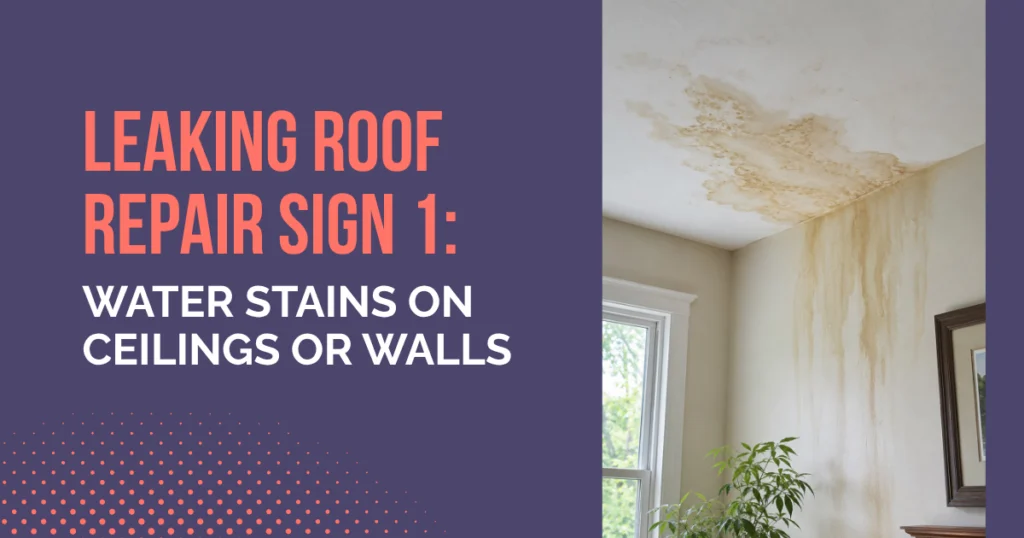
Leaking Roof Repair Sign 1: Water Stains on Ceilings or Walls
One of the most common signs of a leaking roof is a water stain on your ceiling or wall. These stains often appear as yellow, brown, or grayish marks. They may start small, but they should never be ignored.
A ceiling stain usually means water has already made its way through the roof system and into the home. The actual leak may not be directly above the stain. Water can travel along rafters, insulation, pipes, or drywall before it becomes visible inside. That is why it is important to have the roof inspected instead of guessing where the water is coming from.
Some homeowners paint over a ceiling stain and hope the issue is gone. That may hide the mark for a short time, but it does not stop the leak. If the roof is still allowing water in, the stain will likely return. Over time, moisture can damage drywall, insulation, wood framing, and even electrical areas.
A small stain after a storm can be an early warning that your home needs leaking roof repair before the next round of rain causes more damage.
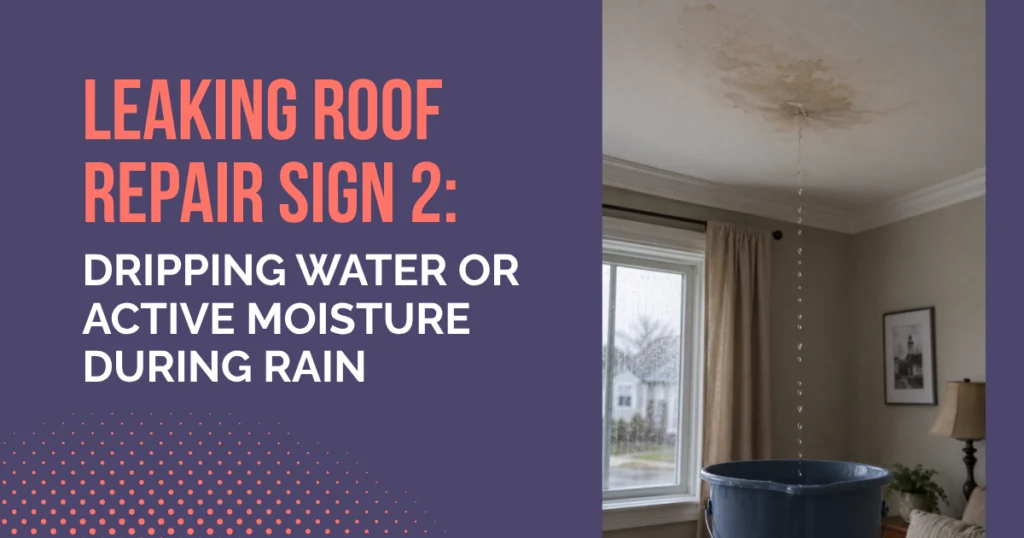
Leaking Roof Repair Sign 2: Dripping Water or Active Moisture During Rain
If you see water dripping inside your home during a storm, you should treat it as urgent. Active dripping means water is entering the home in real time, and the roof is no longer keeping moisture out the way it should.
Sometimes the drip is obvious. You may see water falling from the ceiling, running down a wall, or collecting near a light fixture. Other times, it may be more subtle. You might notice damp drywall, a wet attic floor, moisture around a chimney, or water near a skylight or vent.
Any active leak should be handled carefully. If water is near electrical fixtures, outlets, or wiring, avoid touching the area and take safety precautions right away. Place a bucket under the drip if it is safe to do so, move valuables away from the area, and call a roofing professional for an inspection.
A temporary repair may be possible in some situations, especially if more severe weather is expected. Temporary repairs are meant to limit immediate water entry until a proper repair or replacement plan can be made. For homeowners who are already considering a roof replacement, the cost of a temporary repair may sometimes be credited toward the larger project, depending on the situation.
The key is not to wait. An active leak can move quickly from a small repair issue to major interior damage.
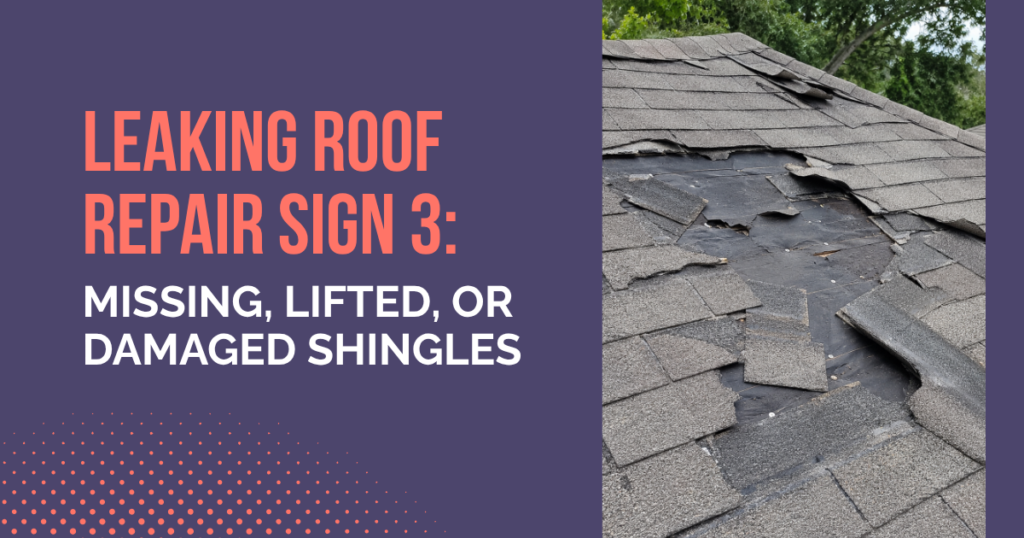
Leaking Roof Repair Sign 3: Missing, Lifted, or Damaged Shingles
Your shingles are one of the first lines of defense against rain and wind. When shingles are missing, cracked, curled, lifted, or damaged, water has a much easier path into the roofing system.
After a strong storm, it is a good idea to look at your roof from the ground. You do not need to climb onto the roof to spot obvious warning signs. If you see patches where shingles are missing, uneven areas, loose pieces, or shingles that appear lifted, your roof may be vulnerable to leaks.
Shingle damage can happen for several reasons. Wind can lift shingles and break the seal that helps them stay secure. Age can make shingles brittle. Heat can dry out roofing materials over time. Poor ventilation can also shorten the life of a roof by trapping heat and moisture in the attic.
Even one missing shingle can lead to water intrusion if the underlayment or flashing below it is exposed. The longer the damaged area stays open to rain, the more likely it is that water will reach the roof deck and interior spaces.
This is why damaged shingles should be inspected quickly. A small leaking roof repair may be enough if the surrounding roof is still in good condition. If the damage is widespread or the roof is near the end of its useful life, replacement may be the better long-term option.
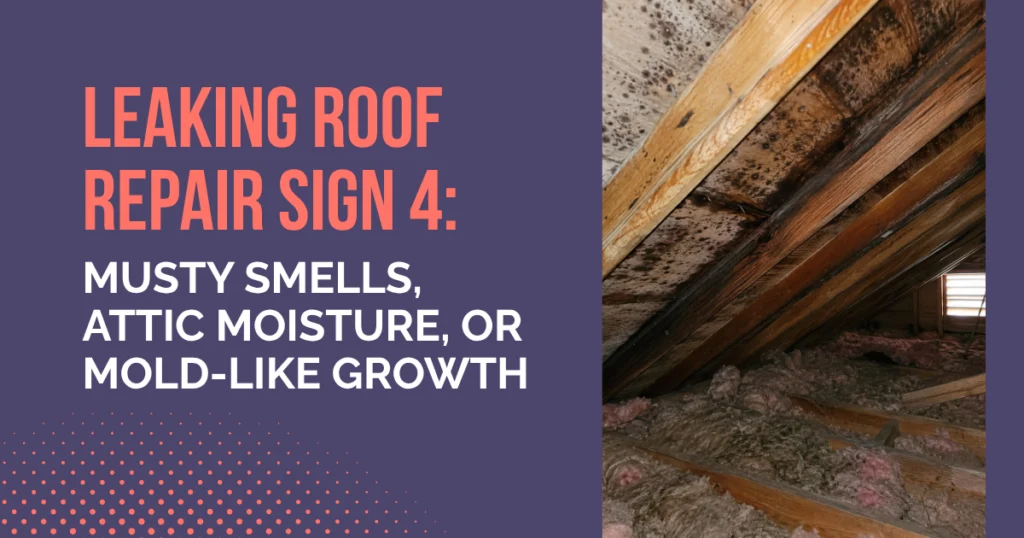
Leaking Roof Repair Sign 4: Musty Smells, Attic Moisture, or Mold-Like Growth
Not every roof leak shows up as a visible drip. Sometimes the first sign is a musty smell inside the home. This odor is often caused by trapped moisture in the attic, insulation, drywall, or wood framing.
If your attic smells damp, feels humid, or shows signs of dark staining on the wood, your roof may be allowing water in. You may also notice wet insulation, rust on nails, or areas that look darker than the surrounding wood. These are all signs that moisture is present where it should not be.
Moisture in the attic can come from roof leaks, poor ventilation, or both. In some homes, a small leak allows water to enter during storms, while poor airflow prevents the area from drying properly. That combination can create ongoing dampness and damage over time.
This matters because attic moisture can affect more than the roof. It can reduce insulation performance, create unpleasant odors, and contribute to indoor air quality concerns. It can also weaken wood components if the issue is left unresolved.
If you notice a musty smell after rain or see signs of moisture in your attic, schedule a roof inspection. A professional can check common leak points such as vents, flashing, roof valleys, chimney areas, skylights, and roof edges.
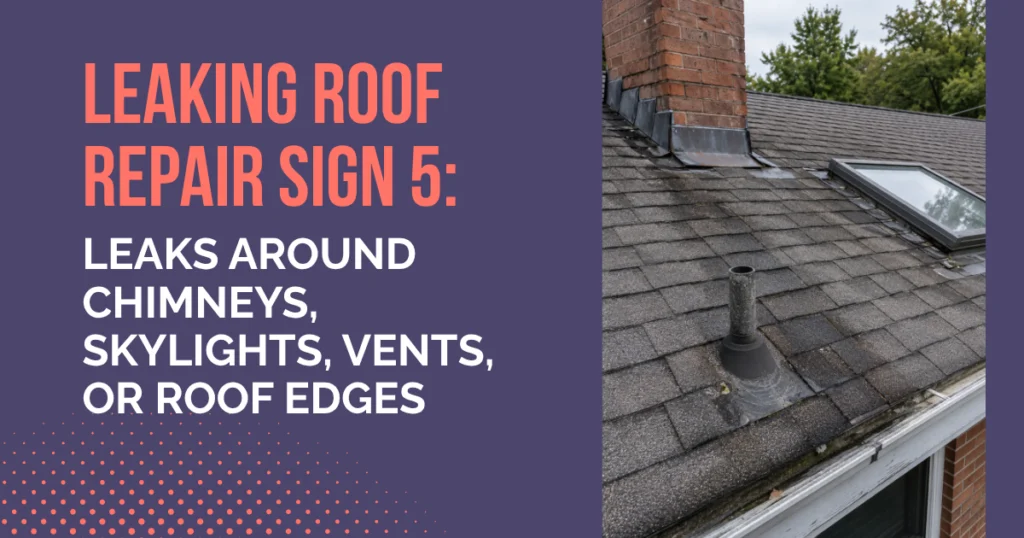
Leaking Roof Repair Sign 5: Leaks Around Chimneys, Skylights, Vents, or Roof Edges
Many leaking roof repair emergencies begin around roof penetrations and transition points. These areas include chimneys, skylights, plumbing vents, exhaust vents, roof valleys, and edges where different parts of the roof meet.
These areas are more vulnerable because they rely on proper flashing, sealing, and installation. Flashing is the material used to direct water away from openings and joints in the roof. When flashing is loose, rusted, cracked, poorly installed, or worn down, water can slip behind it and enter the home.
Chimney leaks are especially common because water can enter through damaged flashing, cracked masonry, a worn chimney cap, or gaps where the chimney meets the roof. Skylights can also leak if seals fail or if the surrounding flashing was not installed correctly. Roof vents may leak when rubber boots crack or pull away from the pipe.
Leaks near roof edges and gutters can also be a sign of trouble. If gutters are clogged, loose, or not draining properly, water can back up near the roofline. Over time, that can affect fascia boards, trim, siding, and the lower edge of the roof.
When water appears near one of these areas, it is important to find the source instead of assuming the visible spot is the only problem. A proper leaking roof repair starts with understanding how water is entering and how far it has traveled.

Why Fast Leaking Roof Repair Can Prevent Bigger Damage
Fast leaking roof repair helps protect the parts of your home you cannot easily see. Once water gets under the shingles, it can damage the roof deck, insulation, attic framing, drywall, paint, trim, and flooring. The longer moisture stays inside the home, the more expensive the repair can become.
Quick action can also give you more options. If the problem is caught early, the repair may be simple. If the leak is ignored for months, the damaged area may spread. At that point, the project may involve interior repairs, wood replacement, mold remediation, or a full roof replacement.
For older homes and 50+ communities, early inspections are especially valuable. Many homeowners do not want surprise expenses or high-pressure sales tactics. A clear inspection can explain what is happening, what needs immediate attention, and what can be planned for later.
The goal is not to scare you into a major project. The goal is to protect your home with the right solution at the right time.
Schedule a Leaking Roof Repair Inspection ASAP
If you see water stains, active dripping, damaged shingles, attic moisture, or leaks near chimneys, skylights, vents, or roof edges, do not wait for the next storm to make the problem worse. A leaking roof repair inspection can help you understand the issue clearly and decide what comes next.
The right roofing team will explain what is happening, show you where the problem starts, and recommend the most practical solution for your home. In some cases, a focused repair may be enough. In others, a temporary repair can help protect your home while you plan for a larger project.
For honest guidance and straightforward next steps, schedule a roof inspection and get clear answers before a small leak turns into a bigger repair.